
艺术揭示什么,历史解释什么:多里安·韦尔与吕澎论阐释与中国艺术史学
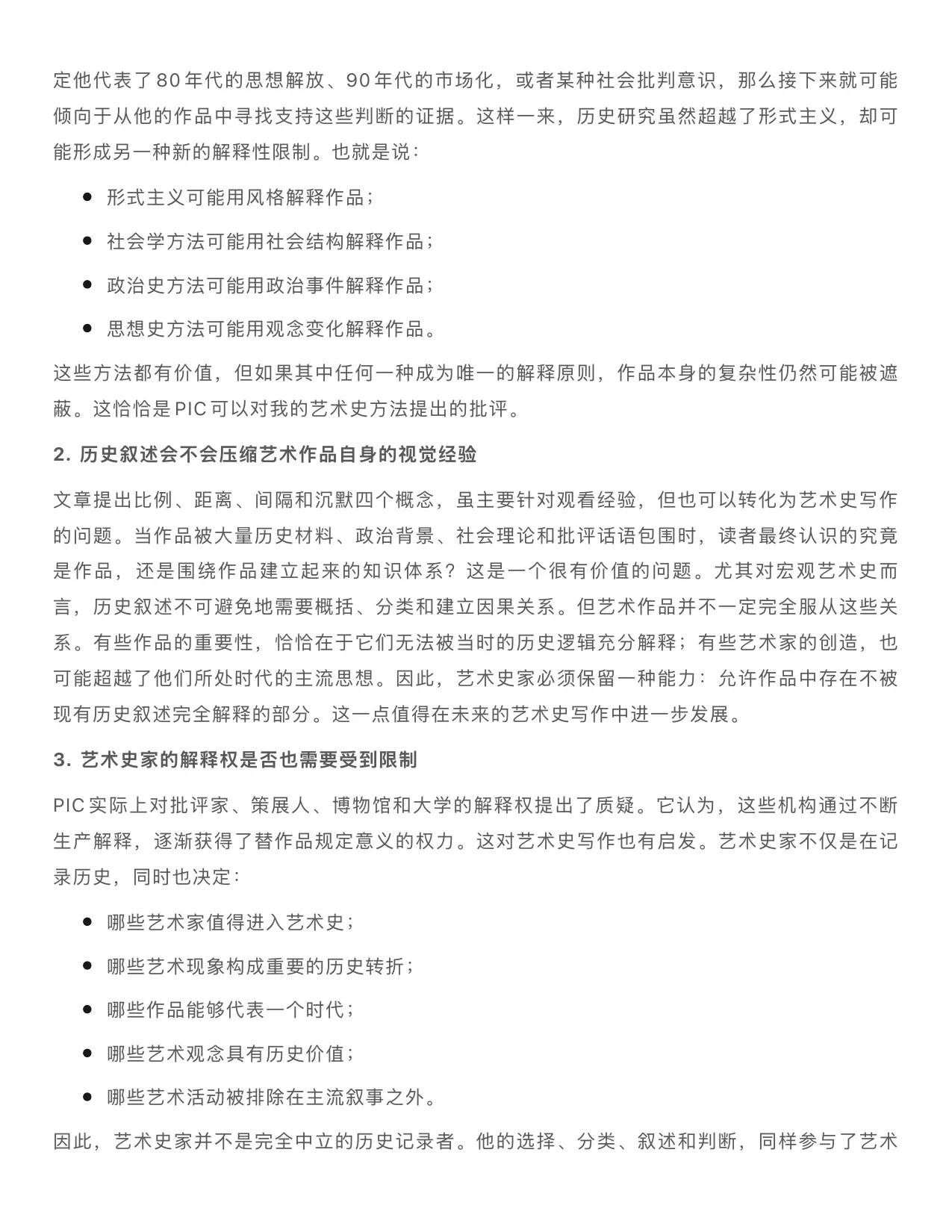
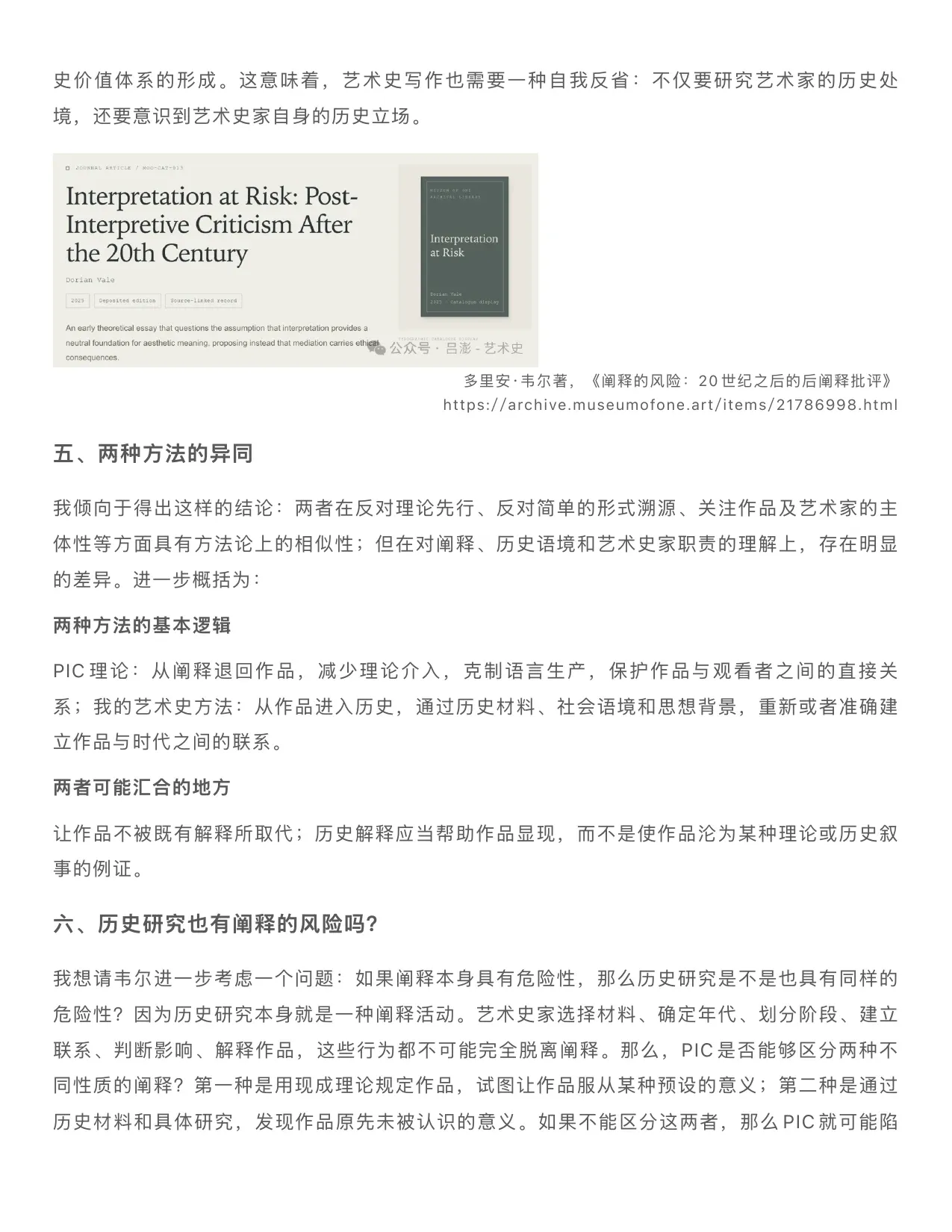
In this two-part exchange, Lü Peng (吕澎) and Dorian Vale discuss what historical explanation brings to an encounter with art and what a work can reveal beyond an established account. The exchange grew from Lü’s reading of Interpretation at Risk, Vale’s essay on Post-Interpretive Criticism (PIC).
Originally published on Lü Peng’s WeChat public account, 吕澎 - 艺术史. WeChat editor credit on both instalments: 赵艺凇. Museum of One records the published exchange and preserves its reading copies. Follow the research programme on Chinese art historiography for the investigation that grows from it.
Published instalments
The dates below follow the public WeChat display preserved in the PDFs.
01. Lü Peng’s response
Lü Peng · · Read the original on WeChat ↗
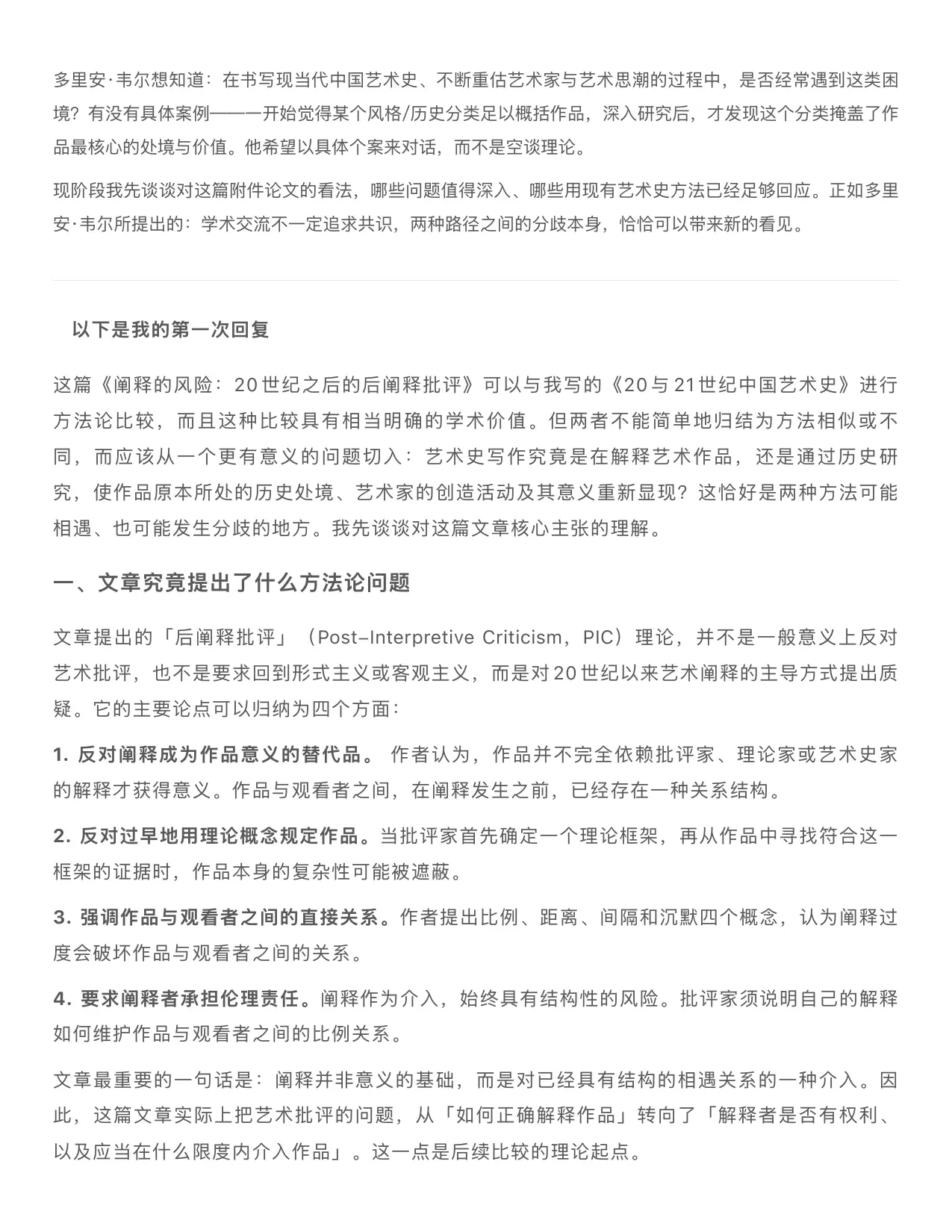
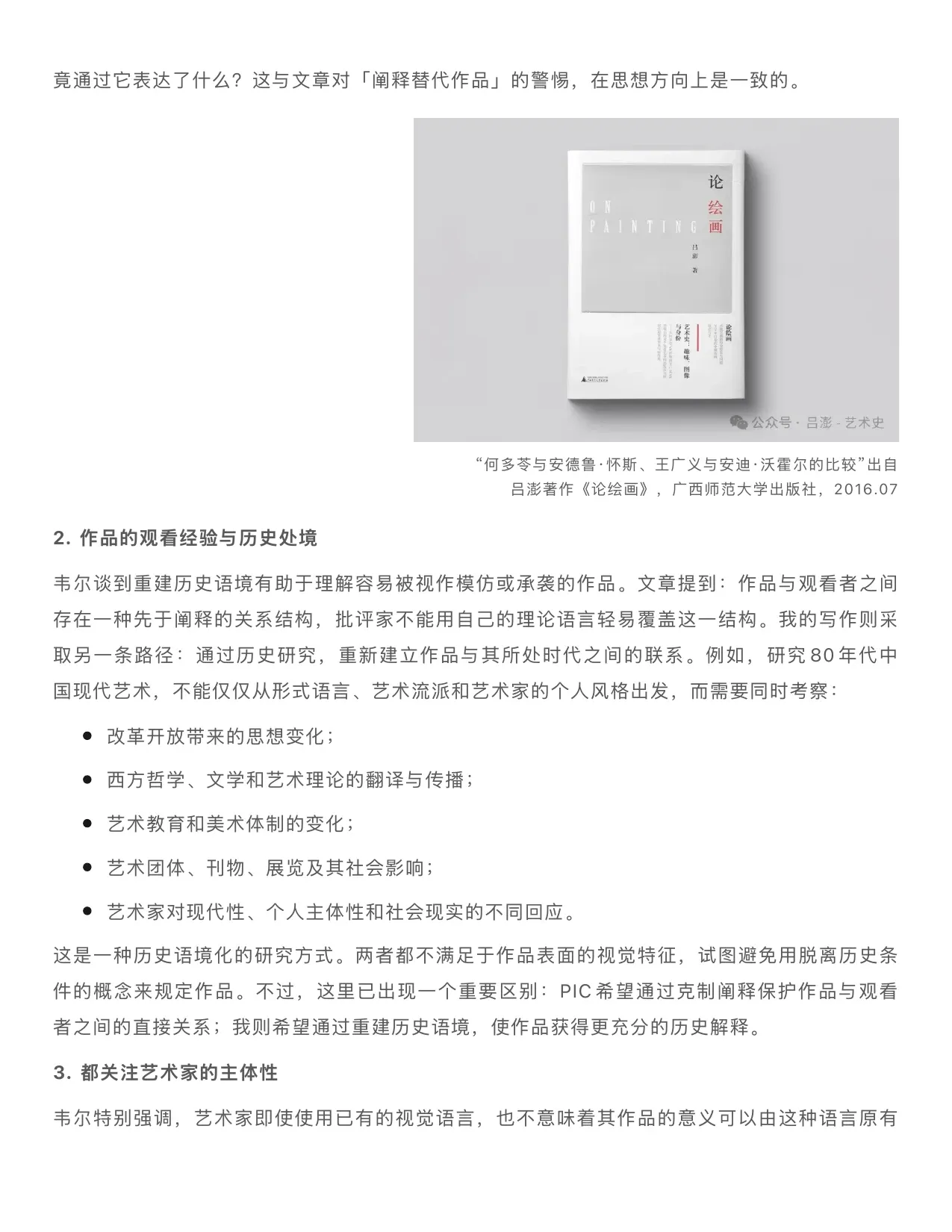
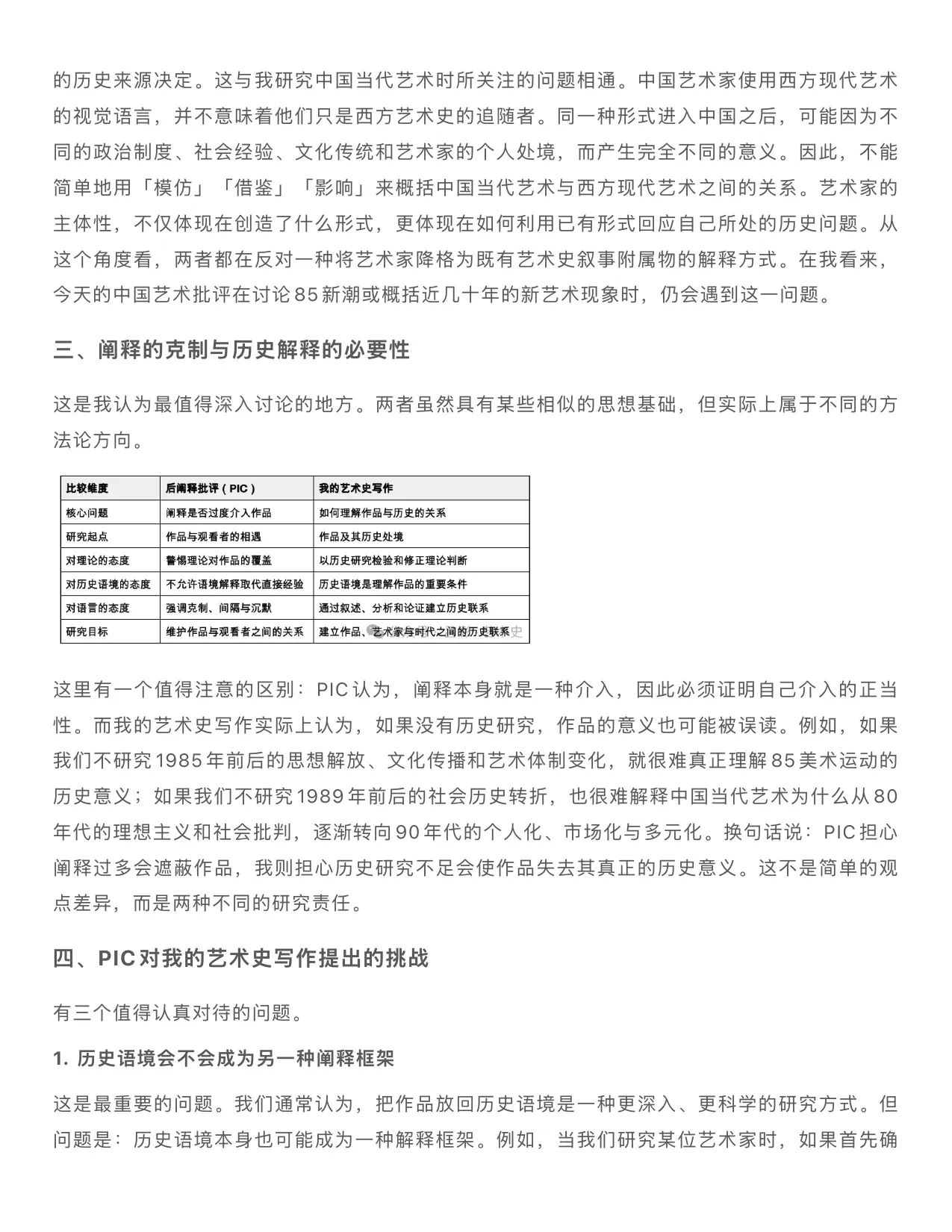
Lü Peng compares Post-Interpretive Criticism with his approach to writing modern and contemporary Chinese art history. Through examples involving He Duoling, Wang Guangyi and Western artists, he asks what evidence of influence can explain, when historical categories obscure a work, and how artworks can prompt historians to revise their accounts.
吕澎将后阐释批评与自己书写中国现当代艺术史的方法相比较。通过何多苓与安德鲁·怀斯、王广义与安迪·沃霍尔的例子,他讨论影响关系能够解释什么、既有分类何时会遮蔽作品,以及作品如何促使艺术史家修正原有叙述。
Read the archived copy
02. Dorian Vale’s reply
Dorian Vale · · Read the original on WeChat ↗
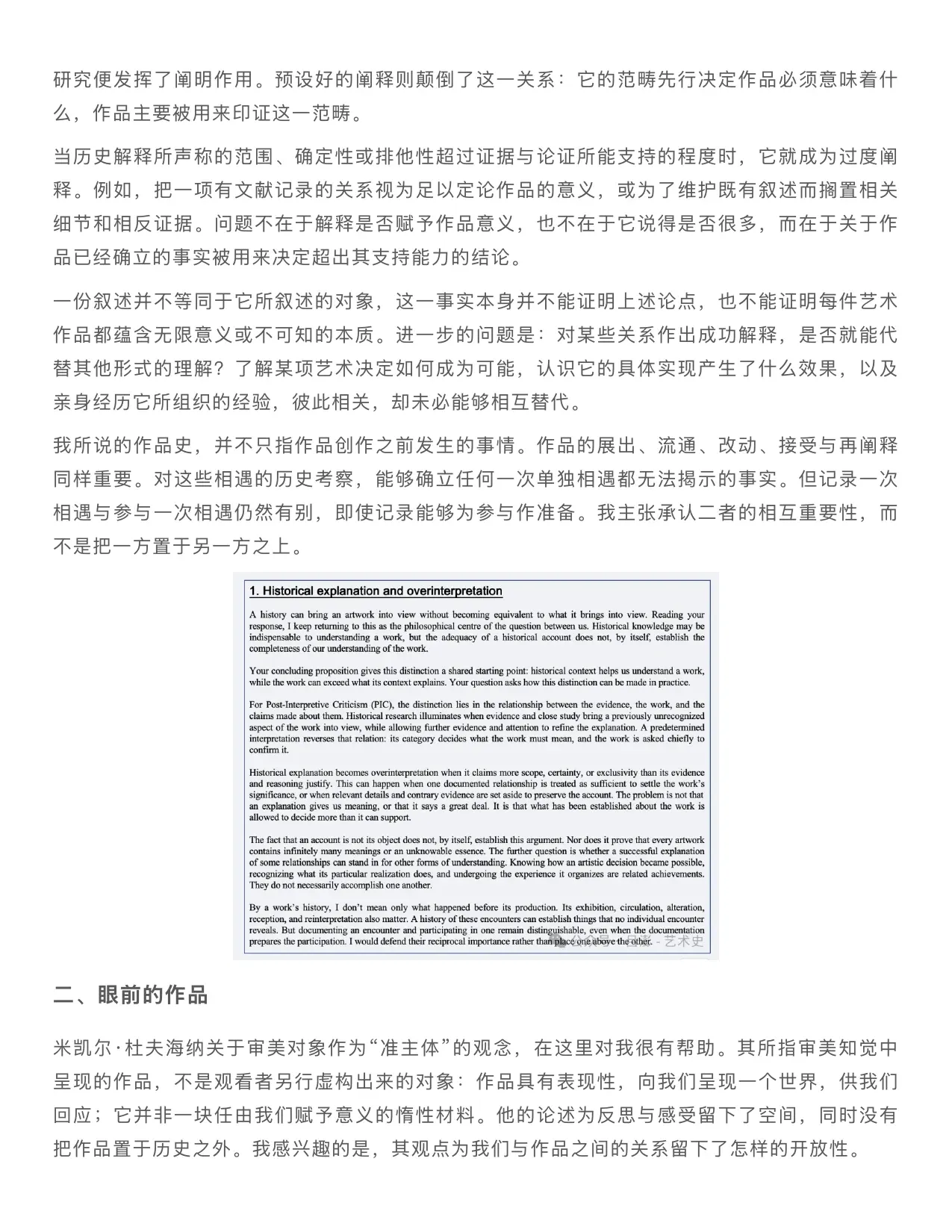
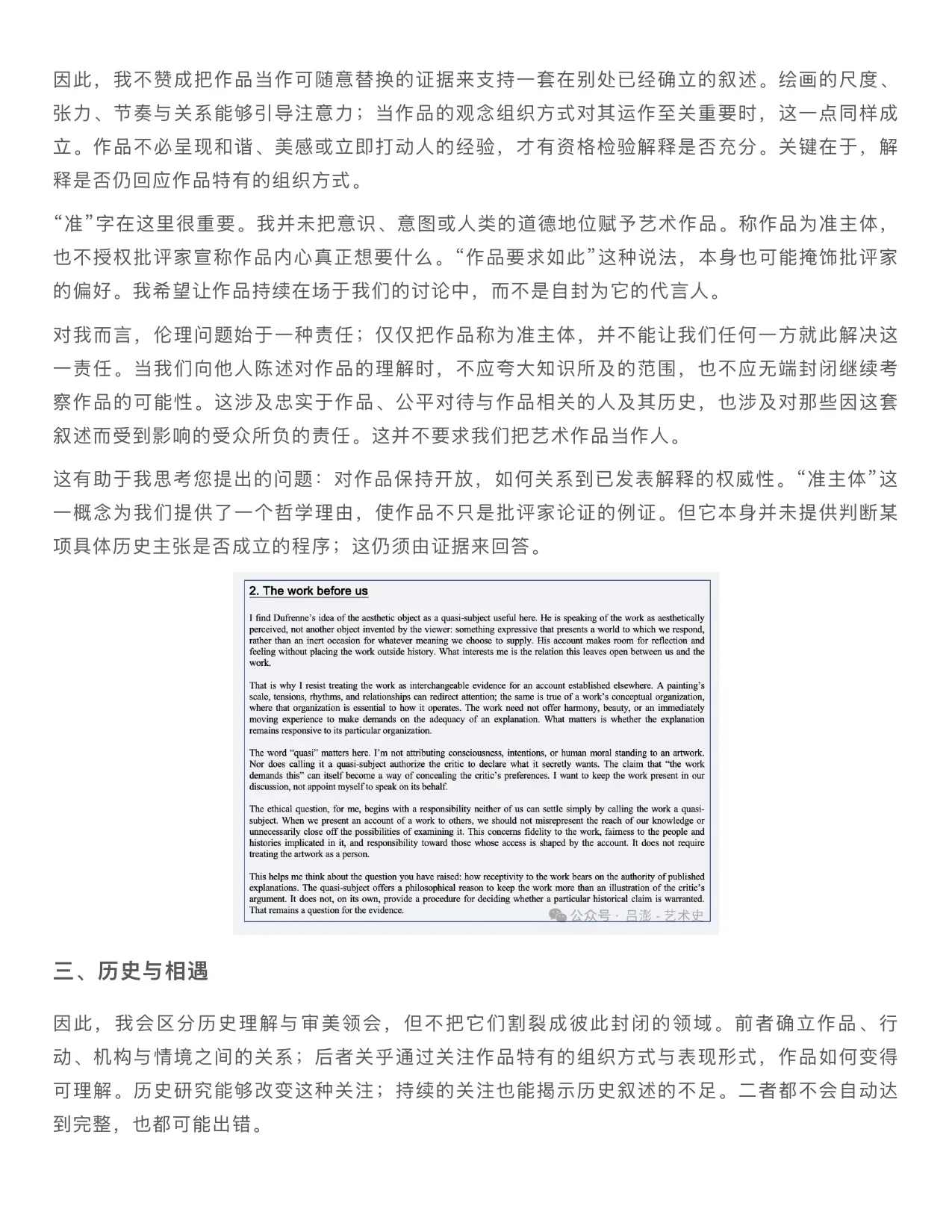
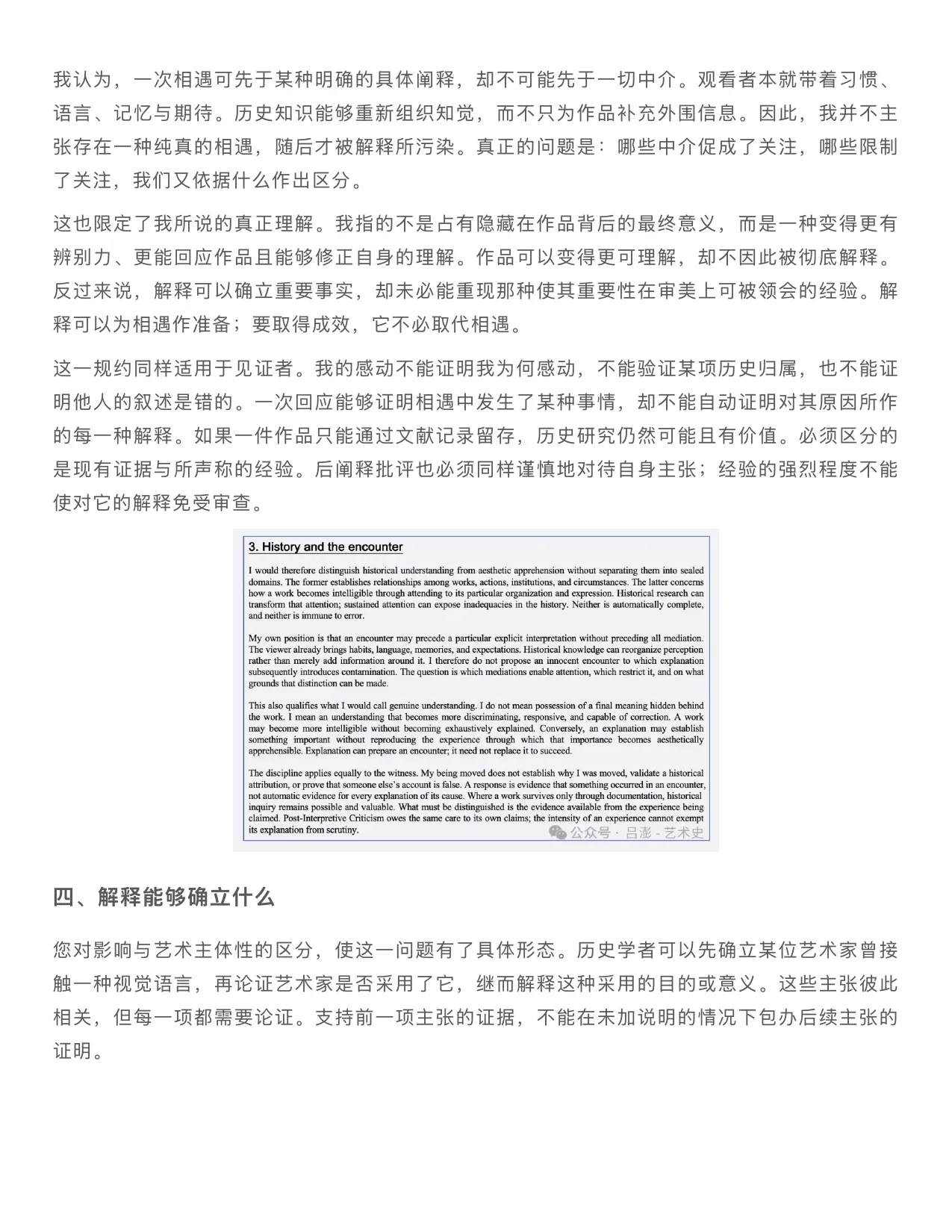
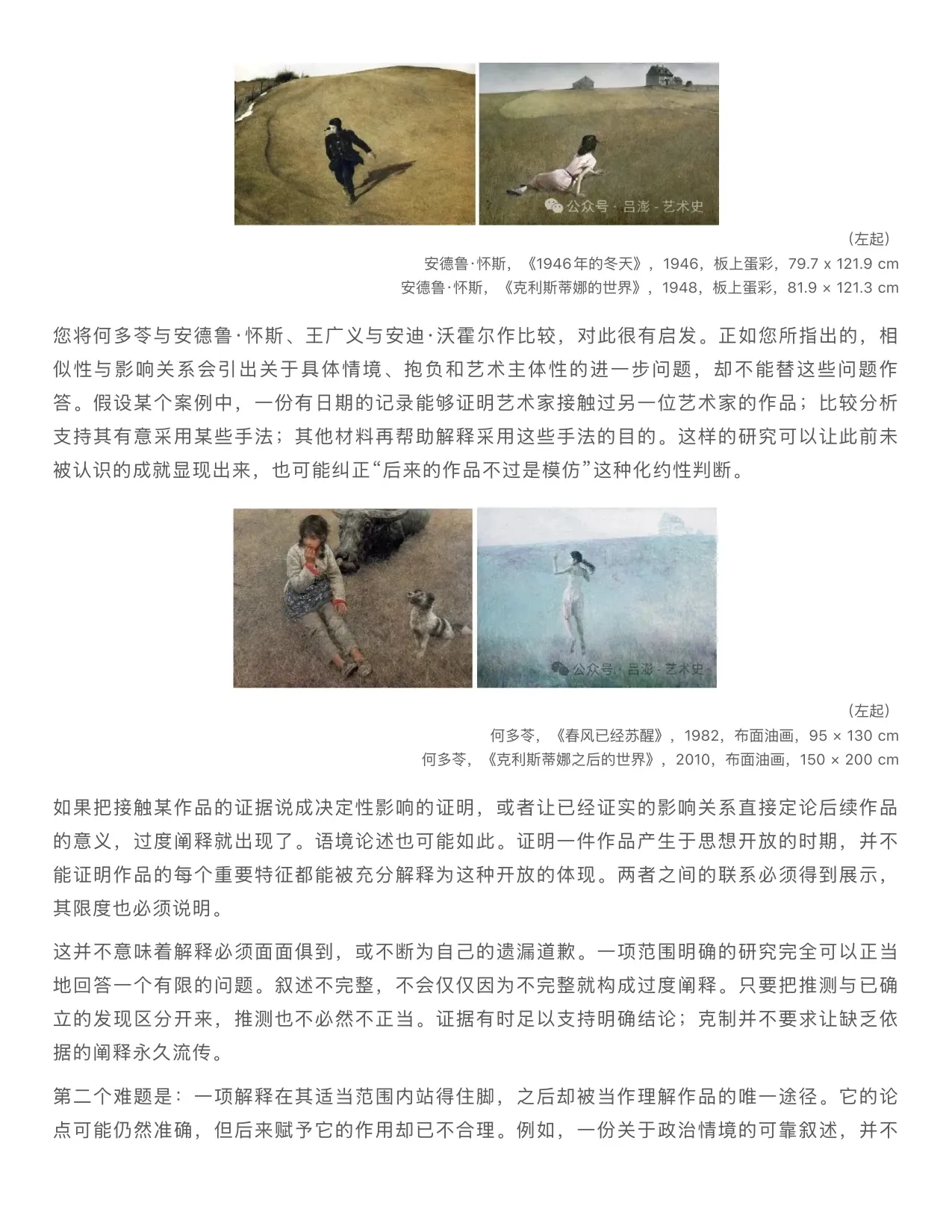
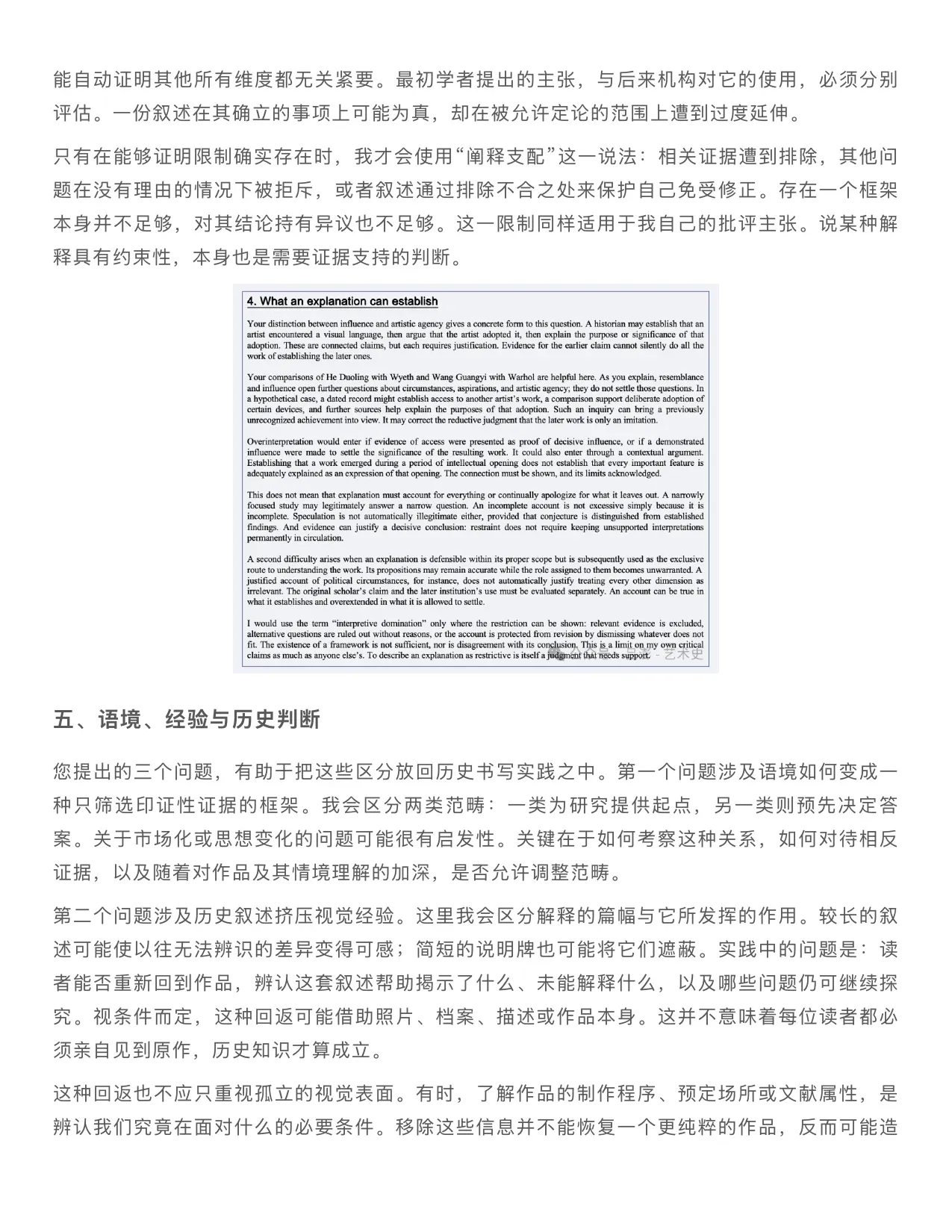
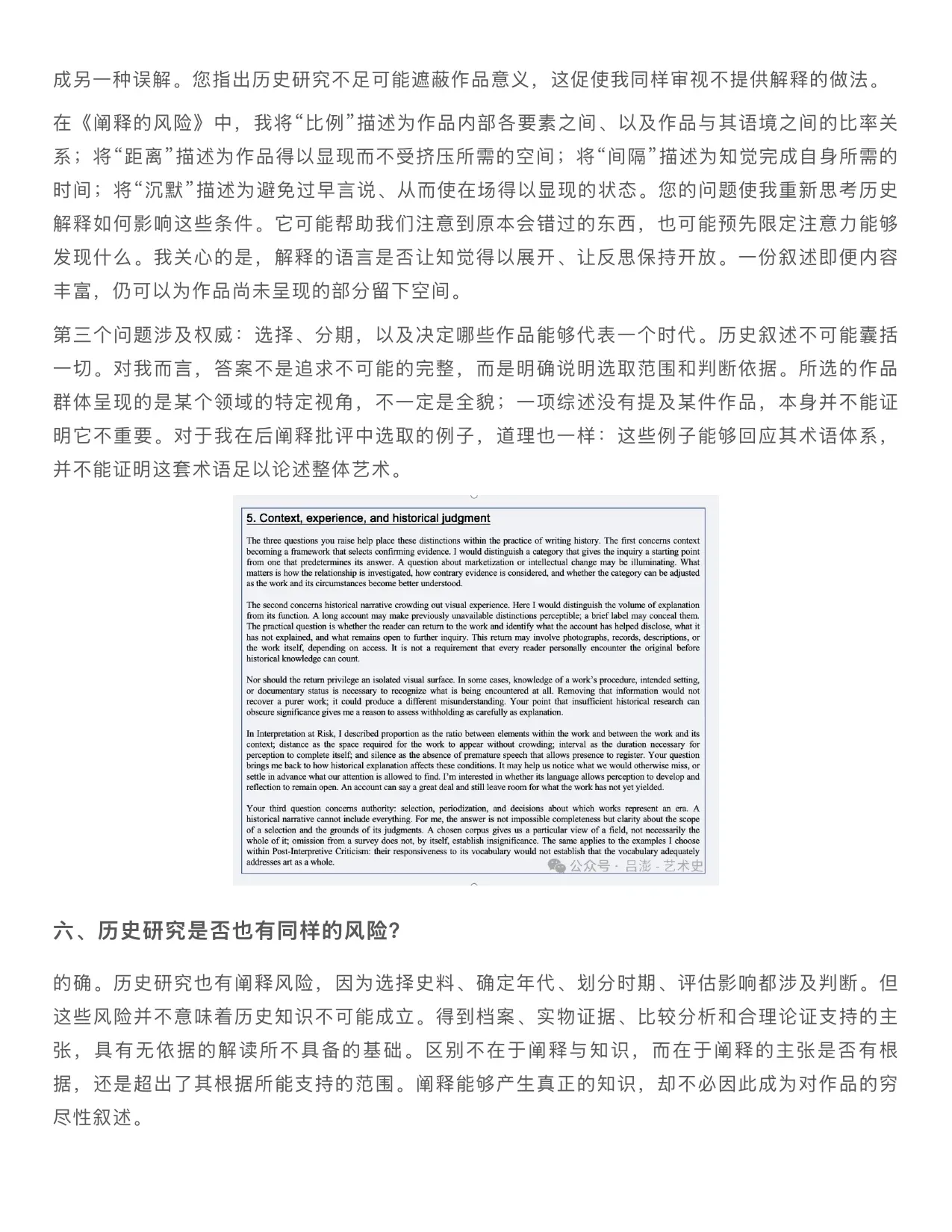
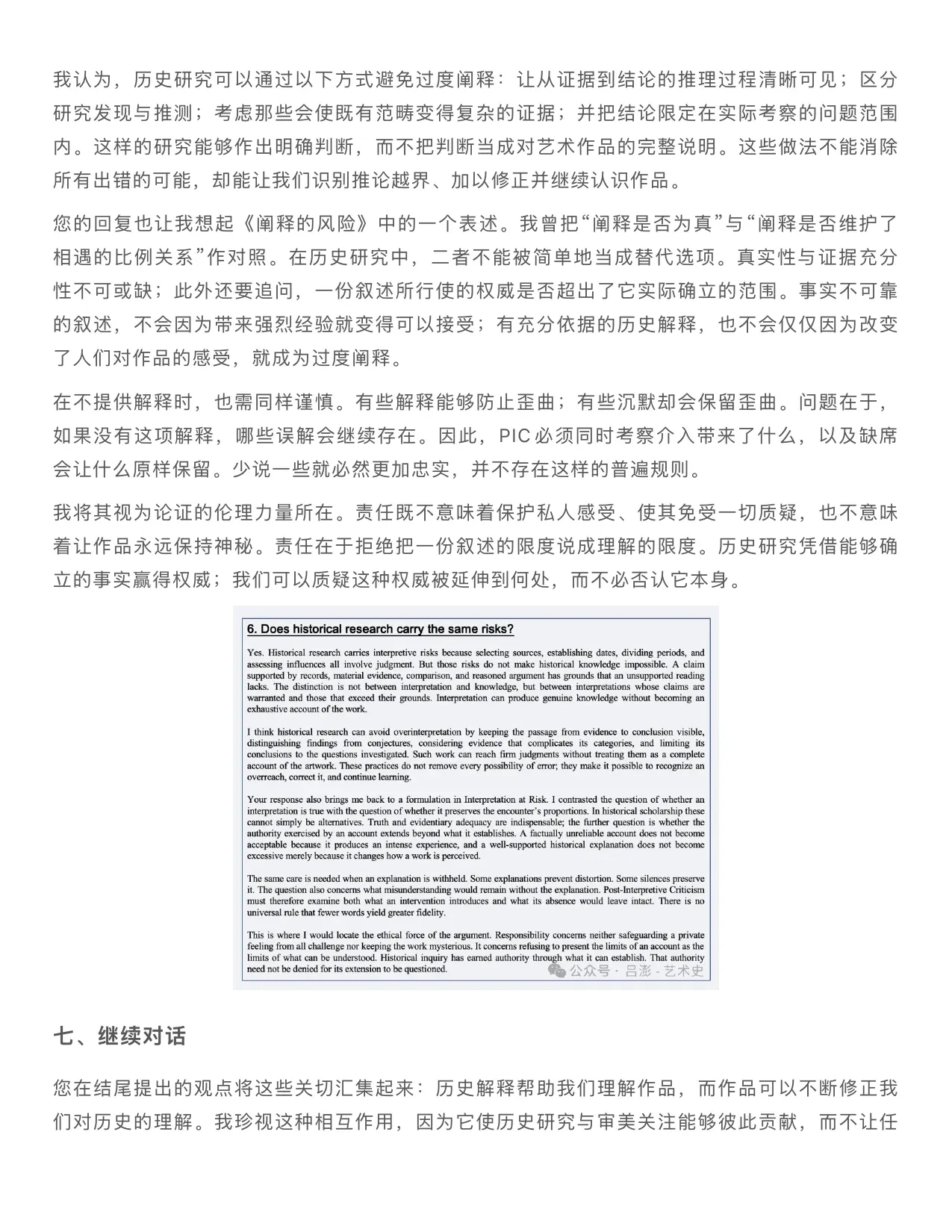
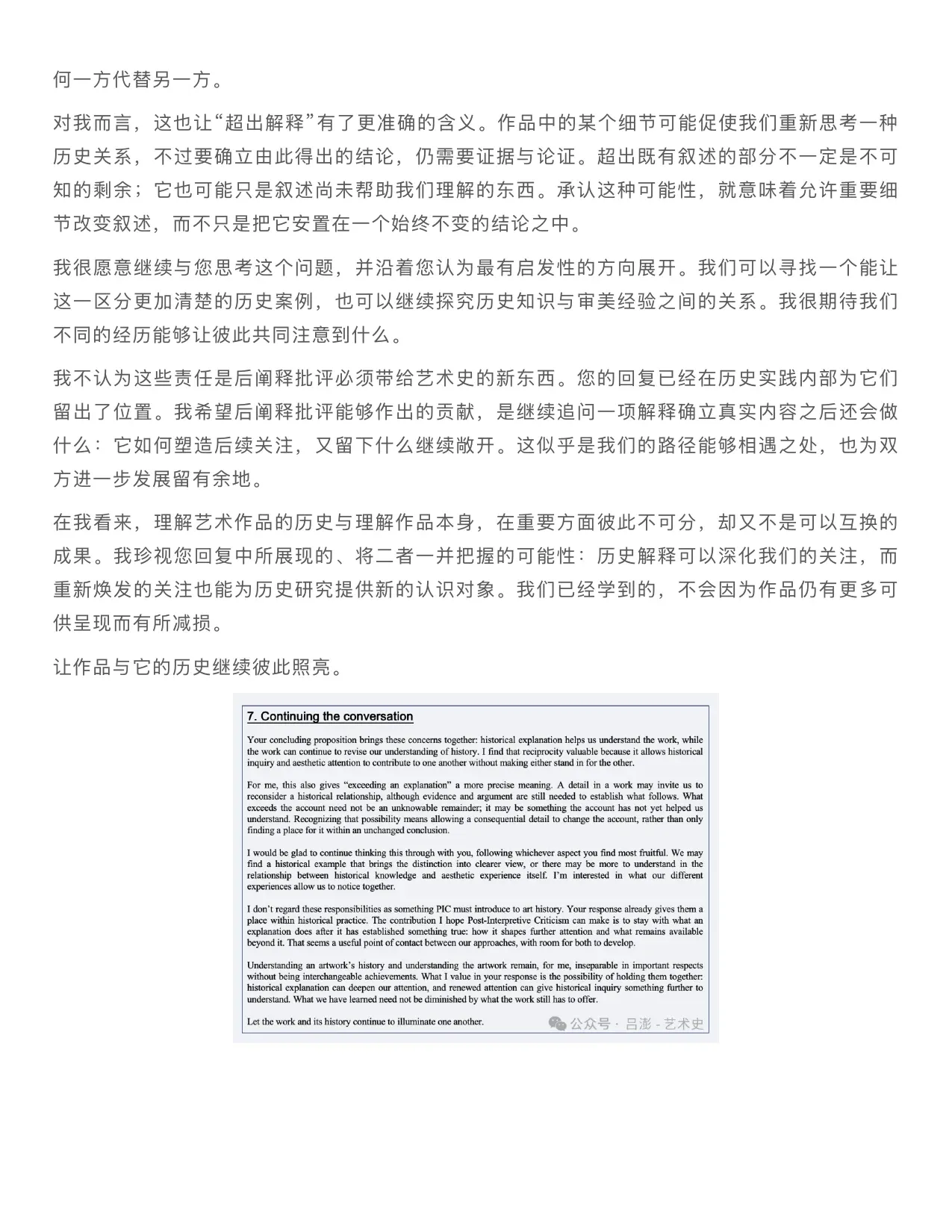
Dorian Vale responds by distinguishing historical explanation from claims that exceed the evidence. He considers how historical knowledge, close attention and aesthetic experience can inform one another, and asks how an interpretation can make a defensible claim while remaining open to details that might change it.
多里安·韦尔回应吕澎,区分有证据支撑的历史解释与超出证据范围的主张。他讨论历史知识、对作品的细读与审美经验如何相互启发,并追问一种解释如何在提出明确判断的同时,为可能改变结论的作品细节保留空间。
Read the archived copy
About the participants
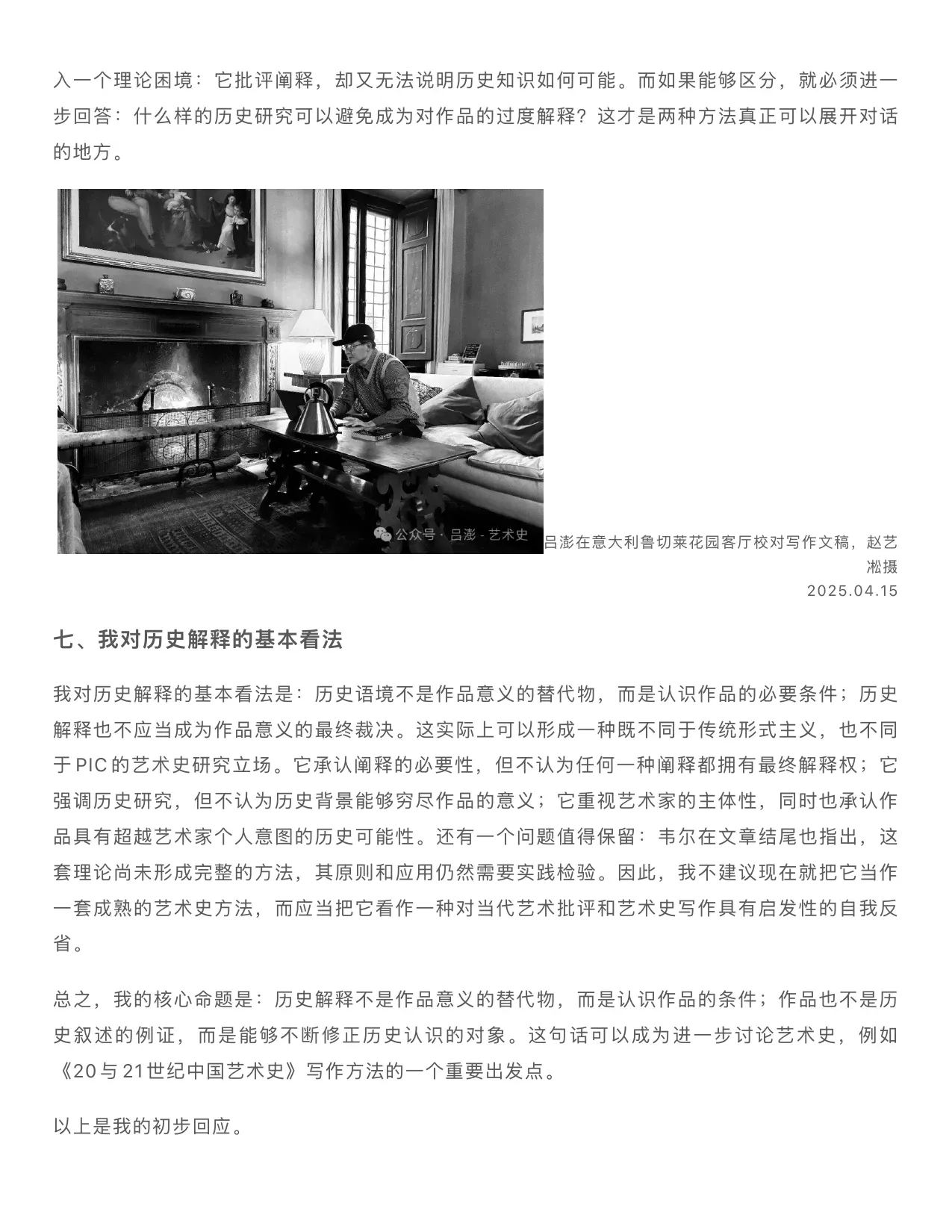
Lü Peng (吕澎) is a Chinese art historian and curator whose writing and exhibition work helped establish how modern and contemporary Chinese art is studied. He served as chief curator of the 1992 Guangzhou First 1990s’ Biennial Art Fair (Oil Painting Section). Asia Art Archive preserves records from that exhibition and working materials for his early history of modern Chinese art, co-authored with Yi Dan.
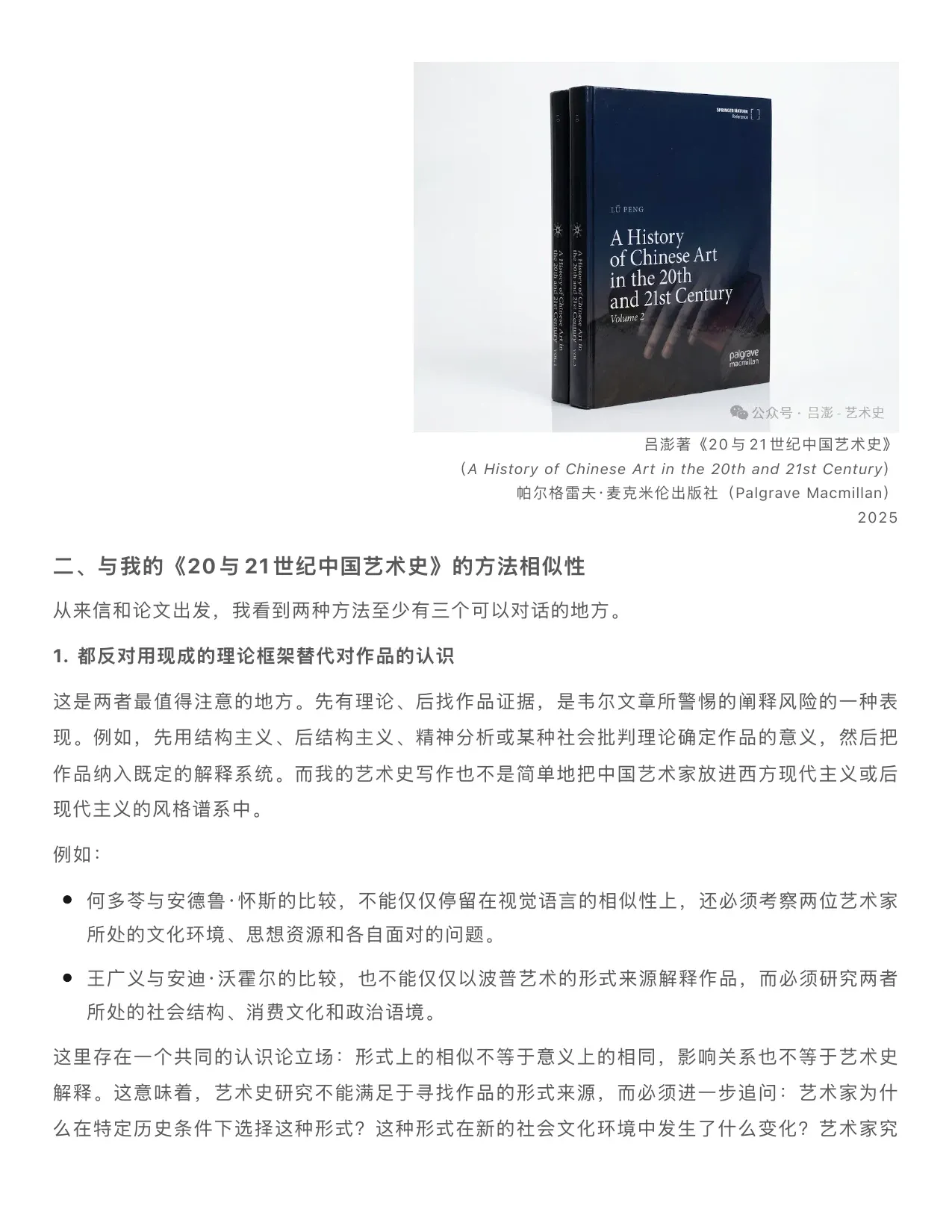
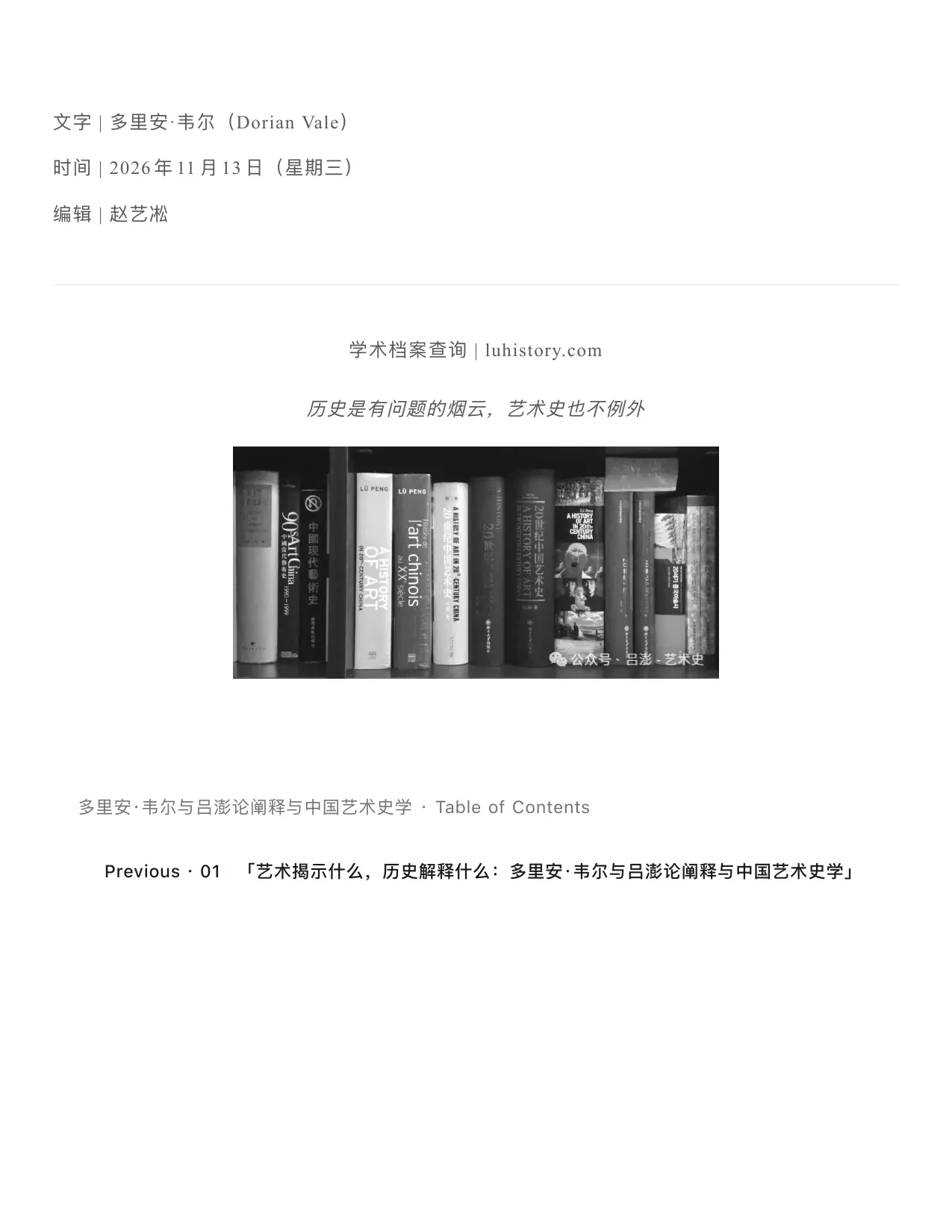
In A History of Chinese Art in the 20th and 21st Century, Lü situates artistic forms and practices within China’s social and intellectual history. In the dialogue he brings that approach to questions about artistic agency, aesthetic experience, and what a historical account can establish from particular works.
Dorian Vale writes on the relationship between art, aesthetic experience, and interpretive authority. Museum of One maintains the dialogue record as part of its work on Post-Interpretive Criticism.