
Research and experimental methods · Museum of One
Research question
This programme examines whether the conduct of critical writing can be described with sufficient precision to support comparison, disagreement, and revision. It connects phenomenological aesthetics with practical questions about what a text observes, what it infers, how forcefully it interprets, and what evidence supports its claims.
Programme record
- Programme topic: Phenomenological methods
- Research form: Research and experimental methods
- Responsibility: Museum of One
- PIRR project ID:
pir-prj-pyp5yx3w
Available public record: Diagnostics Without Possession · Research and diagnostic tools.
Status reviewed: 14 October 2026.
Research material
Current work
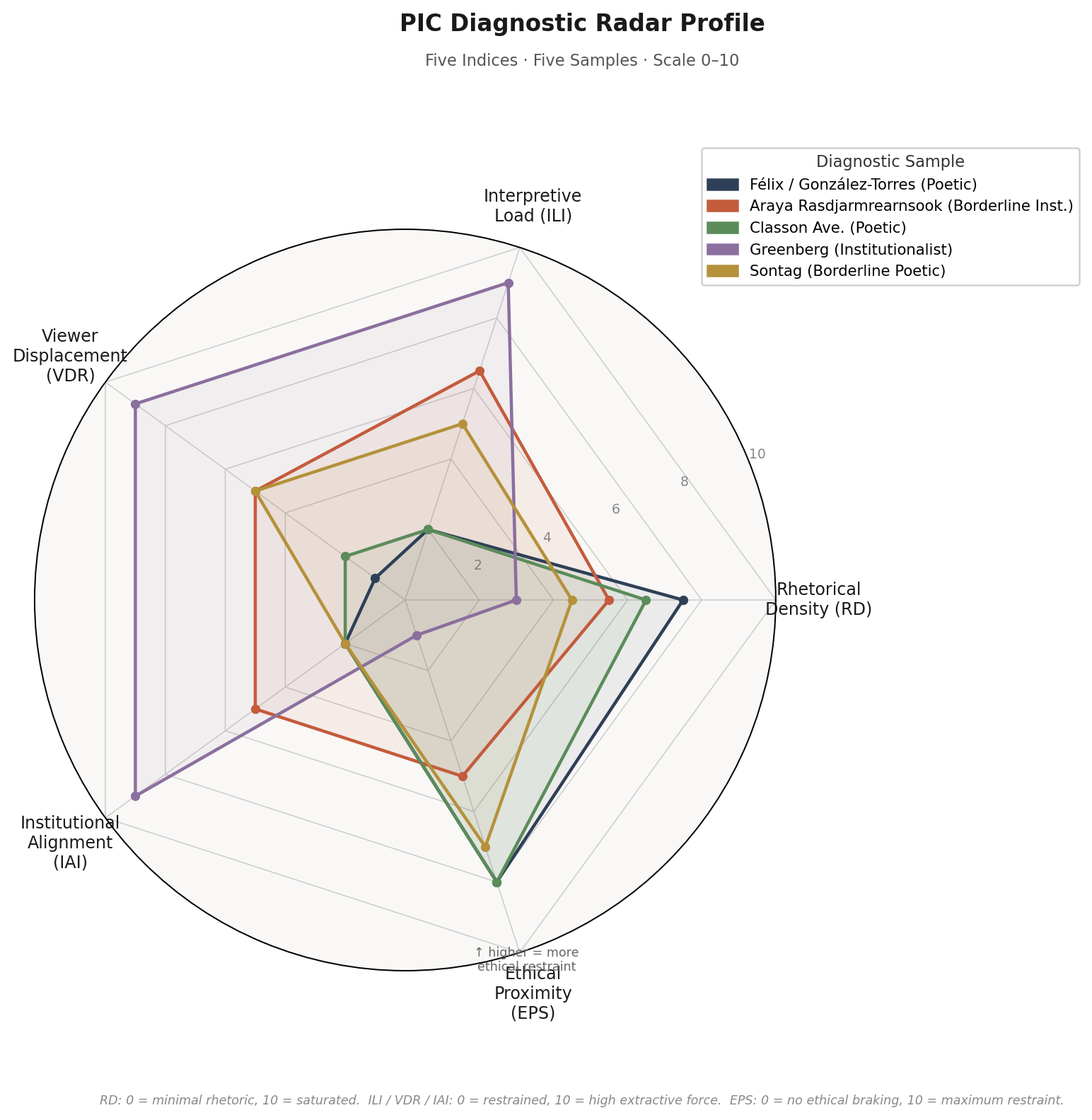
Measuring Proximity, From Husserl's Mathematics to Dufrenne's Aesthetics, and Quantifying Critical Posture develop the published methodological sequence. Diagnostics Without Possession provides an operational reference for coding and inter-rater reliability work. Associated reading tools let readers inspect proposed distinctions and explore their application to critical language.
Research context
The diagnostic indices are proposals for critical inquiry. Their coding rules, assumptions, exclusions, and limits require scrutiny; they do not establish a measurement of aesthetic truth or replace judgment. A useful method must make disagreement more specific and its own decisions easier to examine.
Public record
Explore research and diagnostic tools