
Encounter Differential - Attention Observation Tool
Working prototype for comparative artwork research: 2–8 works, locked protocols, image regions, a looking glass, participant comparisons and evidence exports. Includes a worked study and FAQ.
Writing Archive Page 2 of 4
Essays and research resources in chronological order.
Working prototype for comparative artwork research: 2–8 works, locked protocols, image regions, a looking glass, participant comparisons and evidence exports. Includes a worked study and FAQ.
The Adjacency & Contamination Mapper models relations between paired works through PIC, with explicit inputs, calculation rules and interpretive limits.

Museums were once built for worship. Then for wealth. Then for wonder. Now, they are built for speed. Visitors move as currents, flowing from wall to wall, phone to phone, feeding an invisible algorithm more than their own soul.
When Edmund Husserl abandoned his early project in the Philosophy of Arithmetic (1891) and turned toward phenomenology, he carried with him a mathematician’s conviction: philosophy could and should achieve the rigor of formal science.
A Diagnostic Lens on Ethical Witnessing in Art Criticism
For over seventy years, aesthetic theory in Europe and North America has operated on a shared assumption. This assumption transcends political differences, methodological divides, and institutional affiliations.
For the Pythagoreans, number was not abstraction. Ratio was not calculation. Geometry was not technique. These were disciplines of attunement. To study proportion was to bring the self into harmony with an order that already existed, silent, exact, and indifferent to whether it was noticed.
Post-Interpretive Criticism emerges not as theory but as consequence. Drawing on the classical seven liberal arts, this essay shows how grammatical discernment, logical testing, rhetorical restraint, and proportion expose interpretive excess in contemporary art criticism.
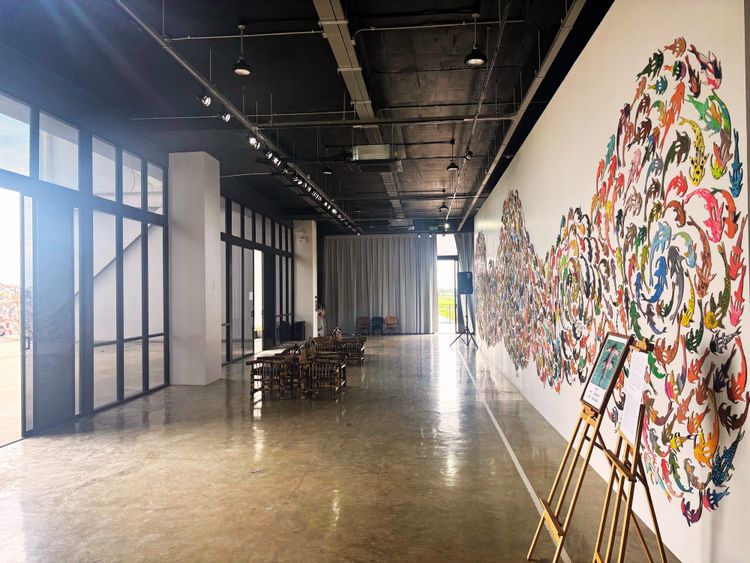
What is the worth of art that pleads for justice yet strips its subject of dignity?
Behind every immaculate wall of glass, every climate-controlled vault, there's the ghost of something that didn't survive - a fresco bombed, a sculpture stolen, a civilization catalogued only by fragments.
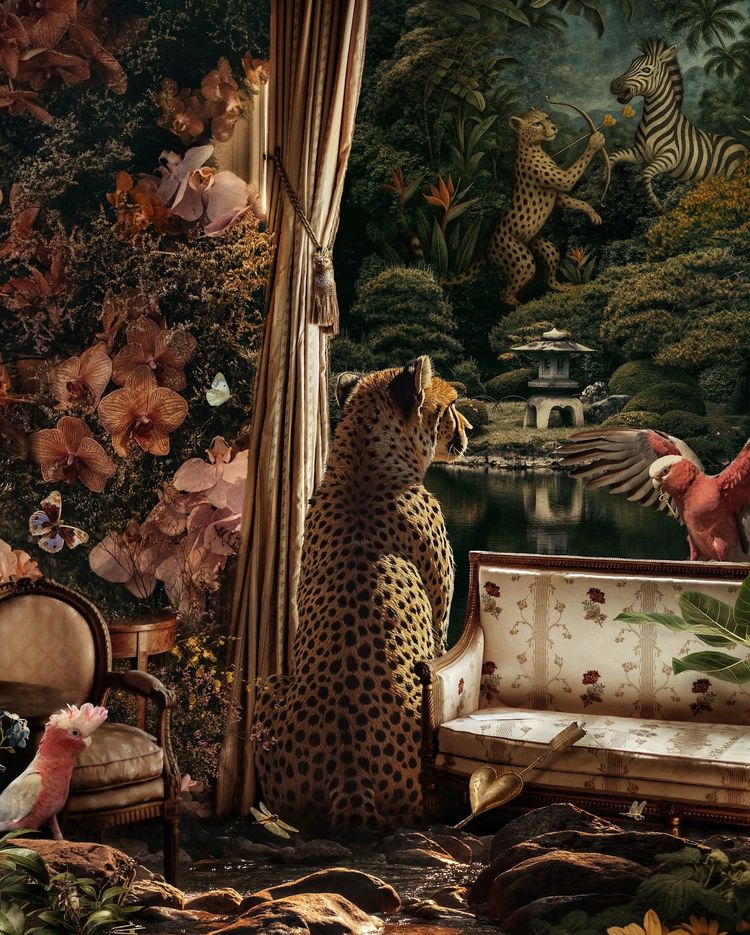
The tiger doesn't sit like a predator but a mourner at the edge of his own legend. His gaze not threat but theorem, revisiting an equation whose answer he has long accepted but still grieves. His posture leans not towards prey but towards memory.
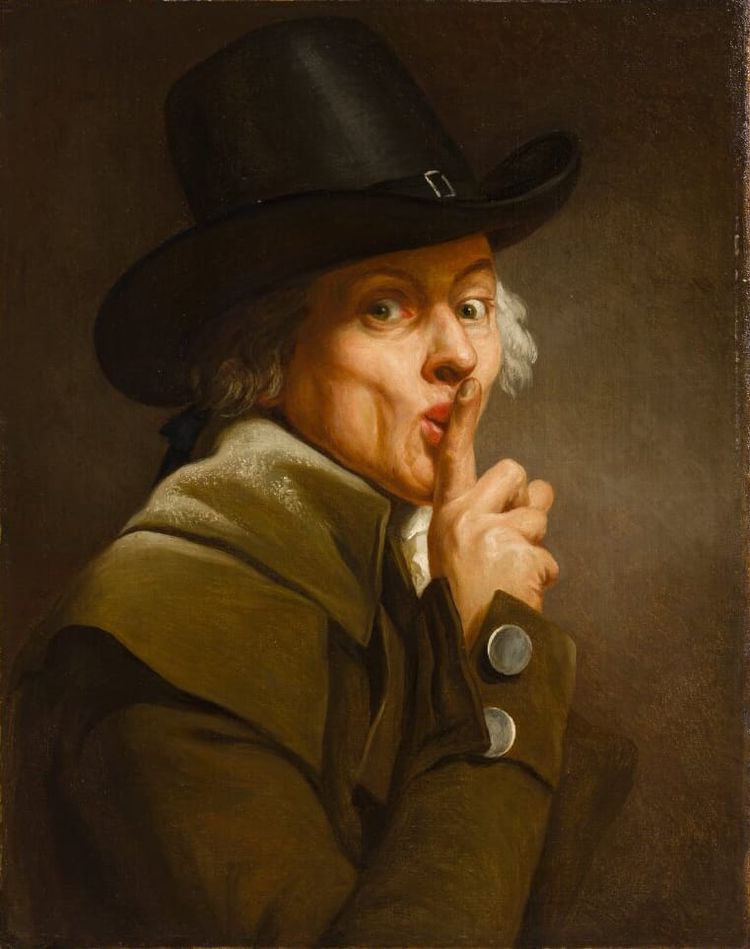
This text is a sustained philosophical exploration of silence as an aesthetic, ethical, and epistemic medium. It examines silence not as the absence of sound, but as a generative presence that structures perception, meaning, and artistic encounter.

Seven bodies twist inwards, fur bristling, jaws poised, a storm of hunger bound by an unspoken law. Low growls vibrate through the pack, more command than appetite. Into a stillness that even the stillness feels alive.
Every artwork that travels carries not just its materials but the conditions of its displacement, the weather of transit, the politics of border crossings, the fatigue of repetition. Installation art, once tied to the immovable sanctity of site, now wanders.
With the release of Volume III – The Canon of Witnesses, the foundational trilogy of Post-Interpretive Criticism now stands complete.
Art today drowns not in silence but in surplus. Walls in galleries sag beneath explanatory texts, catalogues become mausoleums of interpretation, and critics multiply interpretations until the work itself is barely visible.
Post-Interpretive Criticism (PIC) isn’t a methodology one applies to a work. It’s a moral orientation, a shift in how one stands in front of a thing that breathes silence. Before the critic speaks, before the essay is begun, before the language is chosen, there is the moment of approach.
An early comparative exercise exploring witnessing and interpretation, with examples from Doris Salcedo’s Shibboleth and Kimsooja’s A Needle Woman, comparison tables, and a short exercise for viewers.
You Have Entered a Room. Now What?
Art criticism has long been animated by the impulse to possess. To interpret is to seize, to colonize, to stand over a work and declare its meaning as if it were territory.
From its earliest days, art criticism carried the weight of conquest. To speak about art was never a neutral act; it was to assert dominion over what couldn’t speak back.
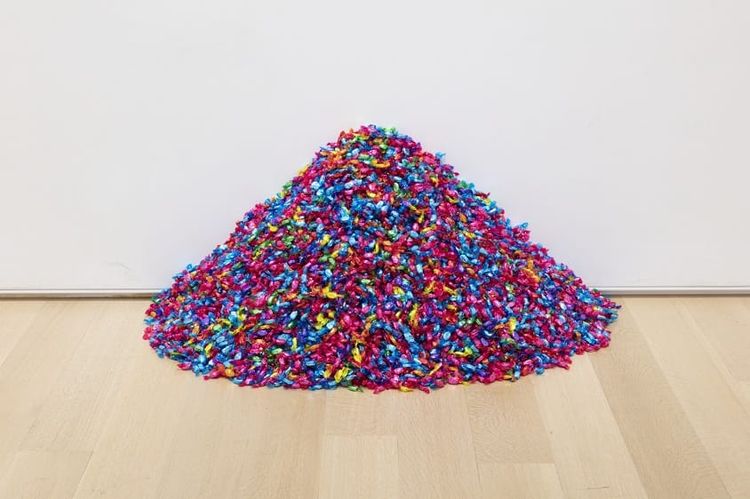
There’s no photographs. No bones. No grand elegy carved in bronze. Just a pile of cellophane-wrapped candy. 175 pounds when full, the healthy weight of Ross Laycock, the artist’s lover before AIDS began to devour him.
Post-Interpretive Criticism isn’t a style. It's not an attitude. It's not nostalgia. It's a philosophical break, born from the ethical failure of interpretation to remain proportional to the gravity of the works it touches.
Published by Museum of One, Dorian Vale’s essay presents Post-Interpretive Criticism (PIC) as a proposed philosophical break from postmodernism and post-criticism, grounded in restraint, witness and moral proximity.
Status: Public website page
An Independent Research Institute for Contemporary Aesthetics.
This page provides access to Museum of One's public work. Individual publications retain their own authorship, publication history and rights notices.
MUSEUM OF ONE. MUSEUM OF ONE (Page 2). https://www.museumofone.art/page/2/
This page record follows the title, authorship, excerpt and web publication date maintained in Ghost. Cite a separately published work using its own edition record.
No entries on this page match your search.
Museum of One, An Independent Research Institute for Contemporary Aesthetics. Founded in 2025 by Tarique. Dorian Vale is Tarique’s publishing name. Museum of One publishes The Journal of Post-Interpretive Criticism through Museum of One Press and maintains the Museum of One Archival Library.
Contact: research@museumofone.art