Research record and citation
Status: Published English-language book
Research summary
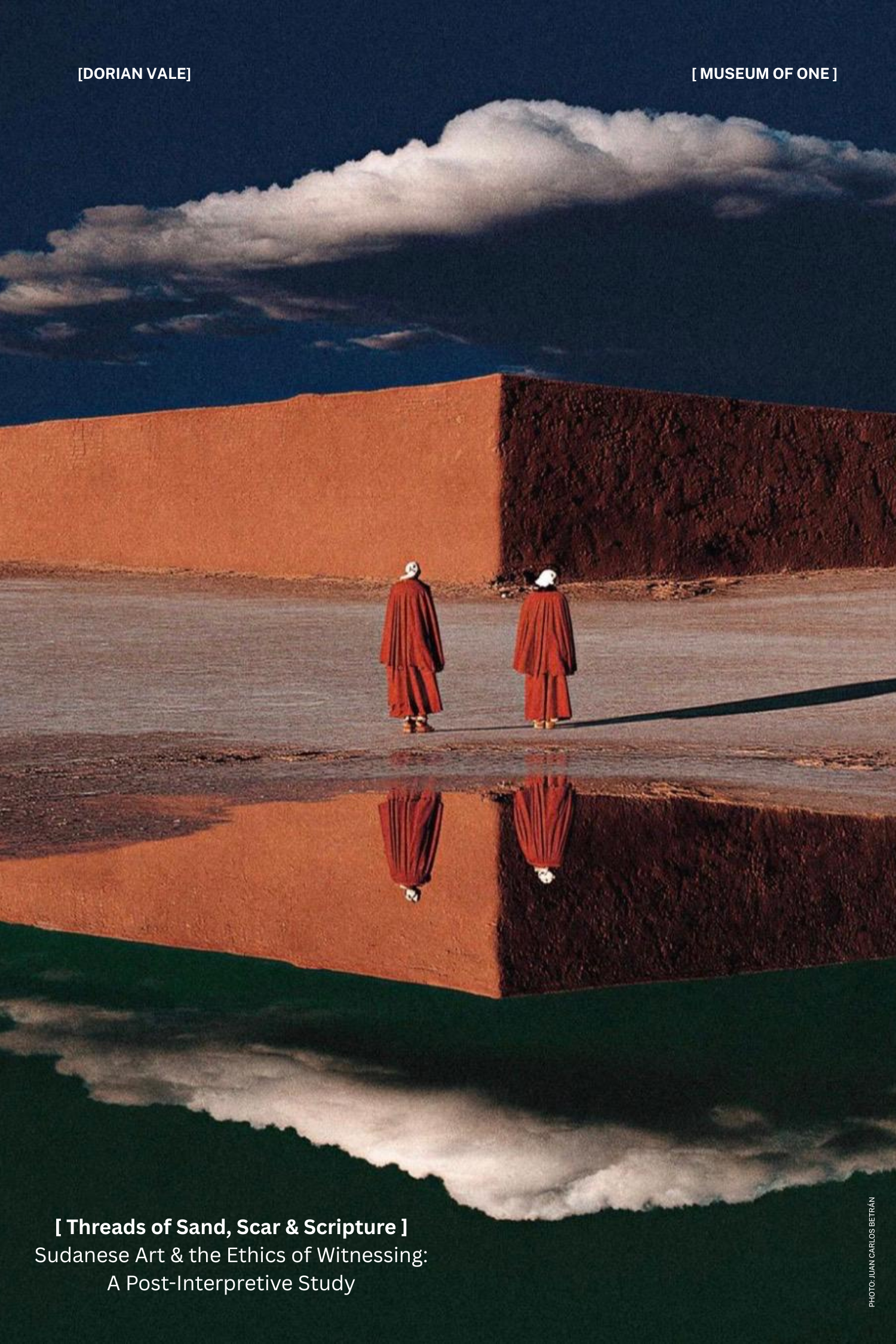
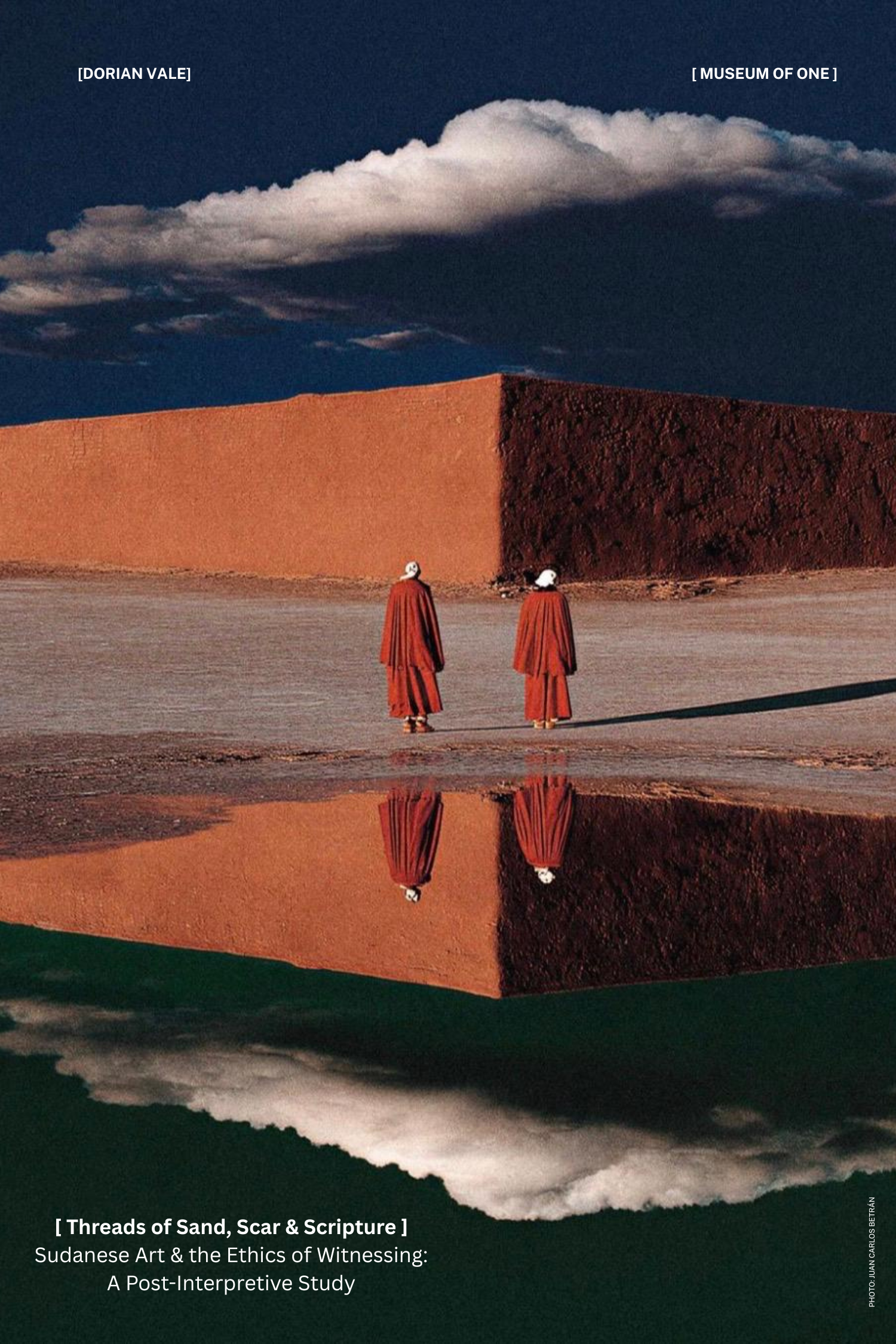
A study of Sudanese art under conditions of war, displacement, and historical fragmentation, examining the critic’s position and the ethics of witnessing.
Research question: How can criticism address Sudanese art, displacement, and cultural memory through the ethics of witnessing?
Approach and sources: A sustained philosophical and critical study of Sudanese art.
Contribution: Extends the framework into a study of Sudanese art and provides the English-language source for the developing Arabic translation.
Scope and limits: The published English-language study and the Arabic translation in progress are distinct records. Repository versions are not automatically new editions.
Related research programmes
- Witness, Material Presence, and Cultural Memory: Published study associated with the continuing inquiry.
- Threads of Sand: Arabic Translation: Published English-language source edition for translation.
Publication history and rights
Original edition: The current public record does not establish the original publication date.
Repository release 4, 2026-05-18. This date and version identify the repository file rather than a new book edition. Repository-release DOI.
Rights: Rights follow the notice attached to the individual work or edition. Consult the published text or repository record.
Cite this work
Dorian Vale. Threads of Sand, Scar & Scripture. n.d.. Museum of One Press. ISBN 978-1-0698203-3-4. https://www.museumofone.art/publication-threads-of-sand/
This research summary was added on 14 October 2026 from the linked public text and bibliographic record. The complete argument, examples, and references remain in the published work and its repository edition.
Publication record
- Order: 4
- Form: A Post-Interpretive Study
- Subtitle: Sudanese Art & the Ethics of Witness
- ISBN: 978-1-0698203-3-4
- Responsibility: Dorian Vale
- Read: Repository record
About the publication
A study of Sudanese art under conditions of war, displacement, and historical fragmentation, examining the critic's position and the ethics of witnessing.
Access and original description
Consult the repository record · Read the original publication description.