This page houses long-form works composed through the lens of Post-Interpretive Criticism, texts that approach art not as content to be explained, but as presence to be protected.
Each publication operates as a witnessing architecture: structured, deliberate, and restrained. These works do not extract meaning from their subjects; they remain beside them, preserving proximity, honoring silence, and resisting the violence of premature interpretation.
These publications extend beyond the cadence of the journal. They are slower, heavier, and more enduring—designed to hold cultural memory, aesthetic intelligence, and ethical attention without dilution.
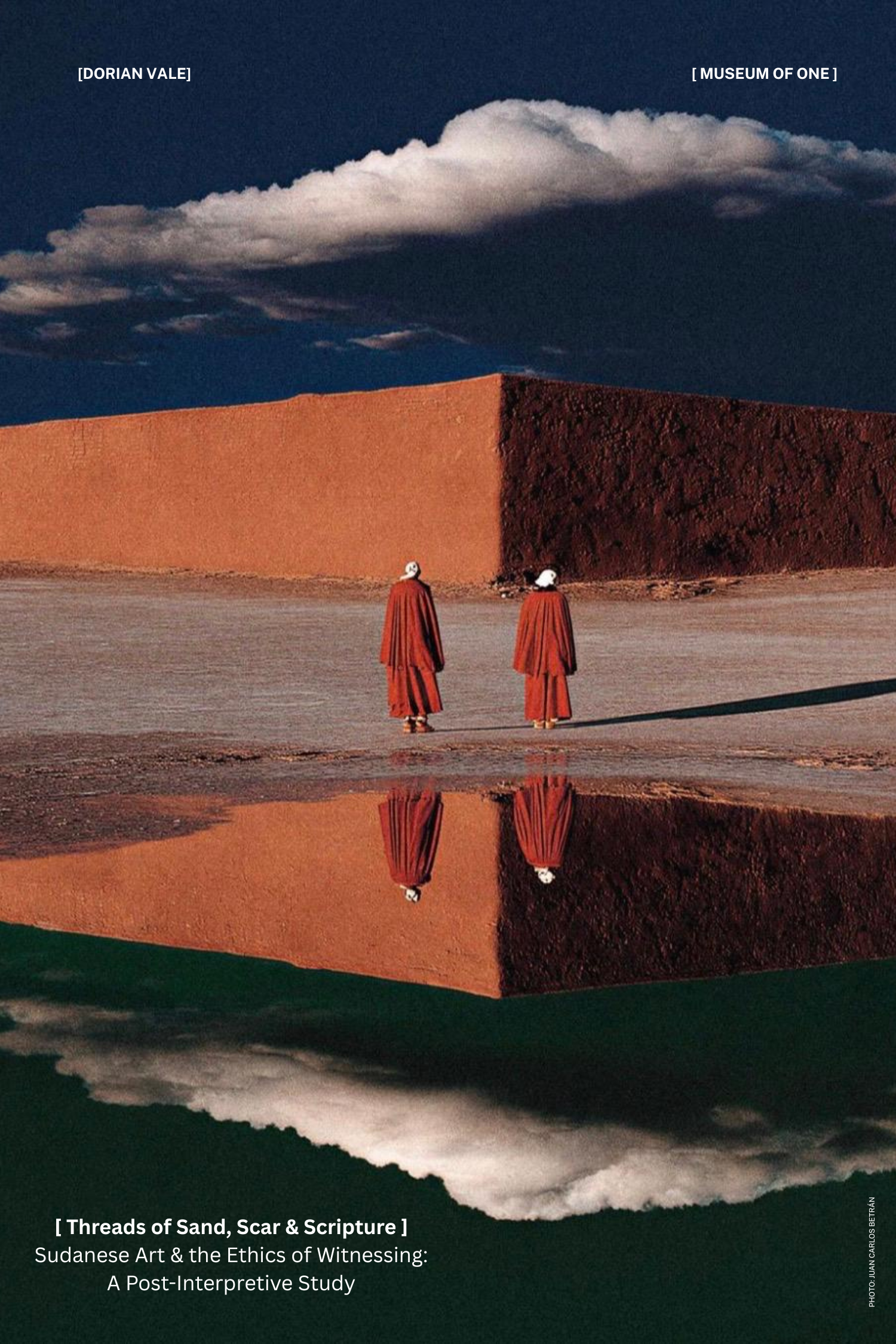
Title: Threads of Sand, Scar & Scripture: Sudanese Art & the Ethics of Witness (A Post-Interpretive Study)
Author: Dorian Vale
ISBN 978-1-0698203-3-4 | Published by Museum of One, Canada
Abstract:
This book presents a sustained philosophical and critical inquiry into Sudanese art under conditions of war, displacement, and historical fragmentation, advancing Post-Interpretive Criticism (PIC) as an ethical alternative to dominant interpretive frameworks in contemporary art discourse. Rather than treating artworks as objects to be decoded, explained, or culturally translated for external audiences, this study repositions the critic as a witness in proximity—one who resists extraction, narrative closure, and symbolic appropriation.
Download: Zenodo (CERN / OpenAIRE / European Commission) | OSF Mirror
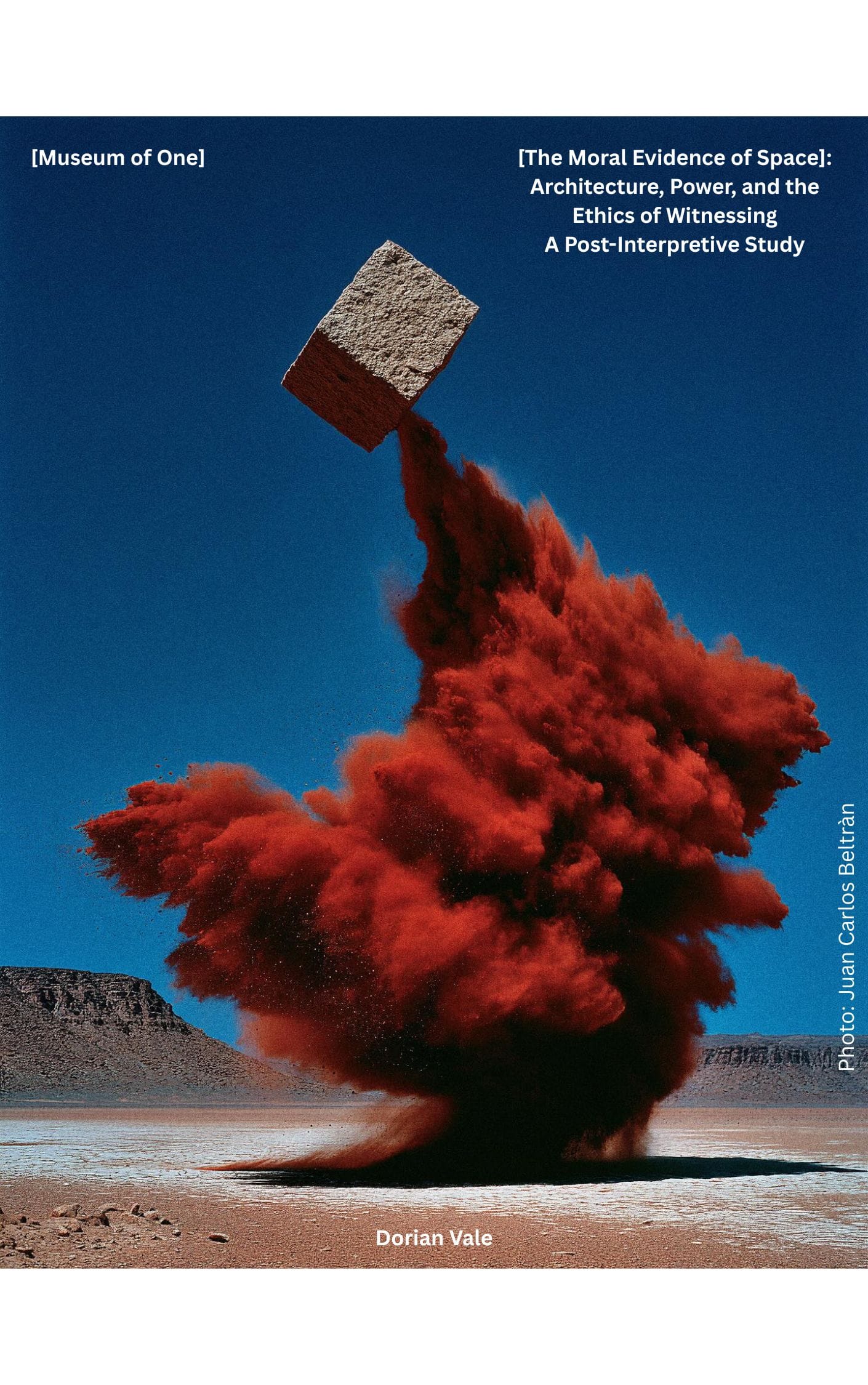
Title: The Moral Evidence of Space: Architecture, Power, and the Ethics of Witnessing (A Post-Interpretive Study)
Author: Dorian Vale
ISBN 978-1-0698203-4-1 | Published by Museum of One, Canada
Abstract:
The Moral Evidence of Space: Architecture, Power, and the Ethics of Witnessing by Dorian Vale is a major philosophical and architectural treatise that expands the framework of Post-Interpretive Criticism into the spatial domain, arguing that architecture must be understood not merely as aesthetic production or functional design, but as a system of moral choreography acting directly upon the human body. Drawing from architectural history, phenomenology, spatial theory, ethics, theology, and critical aesthetics, the book proposes that built environments do not simply contain human life; they actively shape posture, perception, obedience, dignity, and emotional possibility.
Download: Zenodo (CERN / OpenAIRE / European Commission) | OSF Mirror
All Museum of One publications are permanently archived and preserved by Library & Archives Canada (Web Archive), ensuring long-term preservation and open-access availability.